
How Independent Testing Helps Brands Verify Water Quality Claims
A practical look at laboratory methods, sampling discipline, and documentation standards for water quality testing programs.
Read articleA research-led overview of how microplastic particles enter drinking water systems, what scientists can measure today, and where uncertainty remains.

Microplastic contamination is now part of the broader drinking water conversation. Current research shows that tiny plastic particles can be detected in tap water, bottled water, source water, and some treatment systems. The most useful public guidance separates what has been measured from what is still under active study.
Laboratories can count particles, classify size ranges, and identify polymer types with specialized methods. Results vary because sampling design, instrument sensitivity, and contamination controls are not identical across studies.

Caption: Public education should explain both the evidence and the uncertainty behind microplastics testing.
Results are most useful when they disclose the sampling method, detection limit, lab controls, and whether the numbers refer to particles per liter, mass, or another measurement unit.
| Evidence question | Why it matters | Reporting note |
|---|---|---|
| Particle count | Helps compare samples | Needs size range and method |
| Polymer type | Indicates likely source material | Requires confirmatory analysis |
| Replicate samples | Improves confidence | Should be visible in reports |
Health effects, exposure thresholds, and long-term outcomes are still being studied. Clear communication should avoid overstating early findings while still making the environmental signal easy to understand.
Research
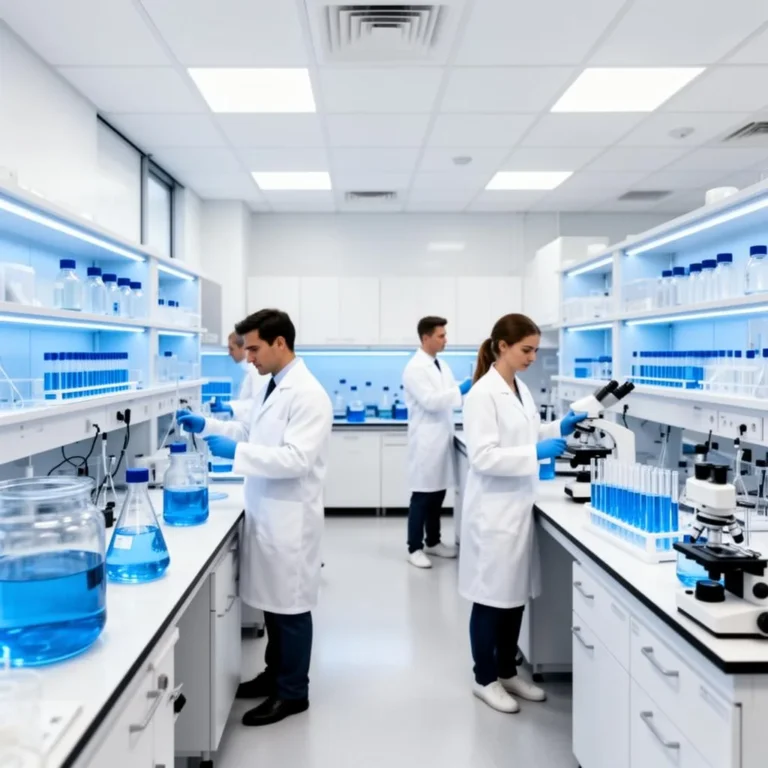
A practical look at laboratory methods, sampling discipline, and documentation standards for water quality testing programs.
Read article
From source water to distribution systems, each step can influence what reaches a household tap.
Read articleMicroplastics research is moving quickly, but public health guidance needs to separate strong evidence from early signals.
Read article